Overview
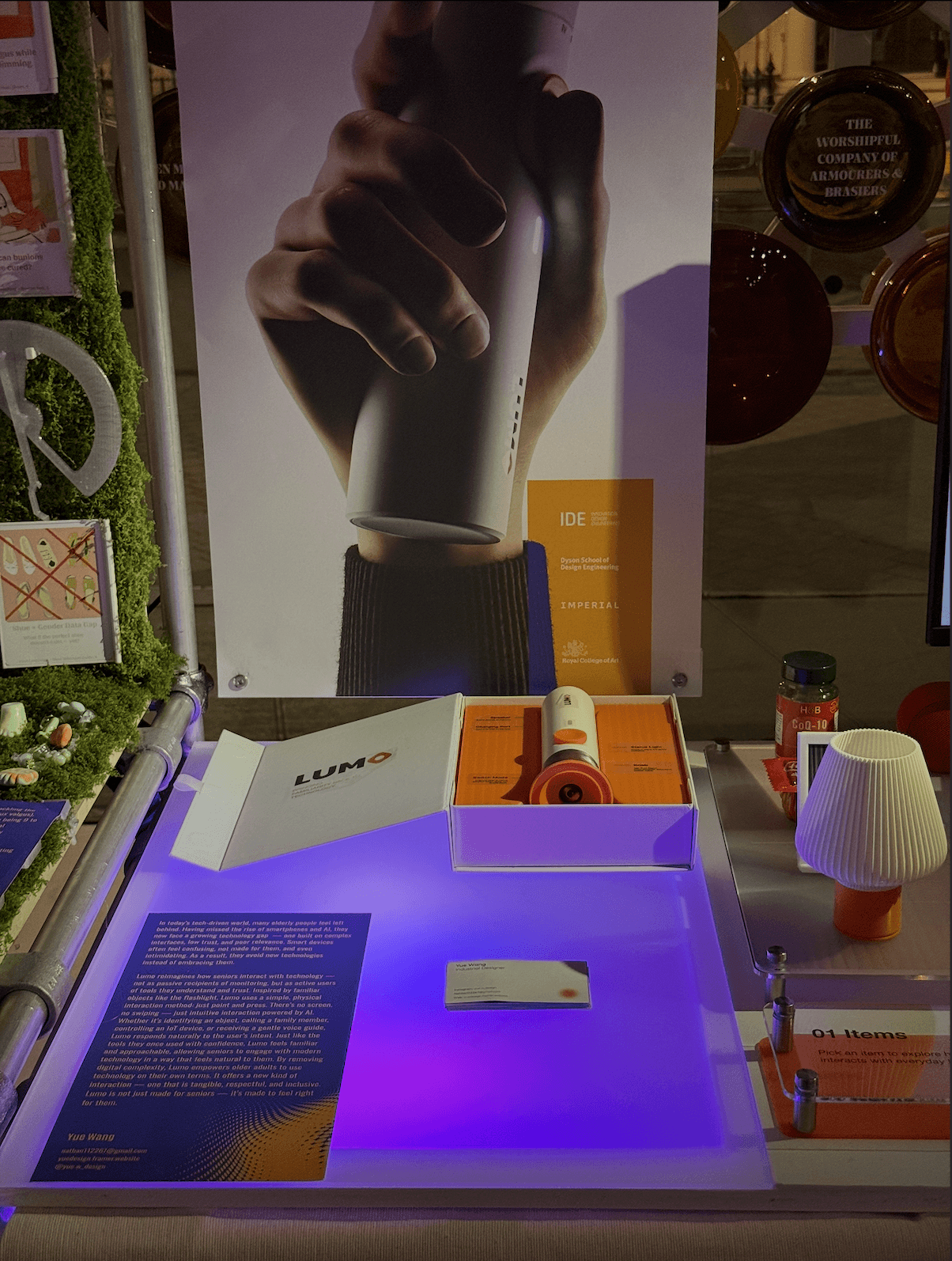
Lumo is an AI tool designed to restore digital independence for older adults by replacing complex screens with simple, familiar physical interaction — bridging the generational technology gap with empathy and accessibility.
Skills
Startup
Service Design
Innovation Design
EV Safety
Rendering:Blender
CAD:Solidworks, Fusion 360
(ID)

bridging the generational technology gap with empathy and accessibility.
Lumo is an AI tool designed to restore digital independence for older adults by replacing complex screens with simple, familiar physical interaction
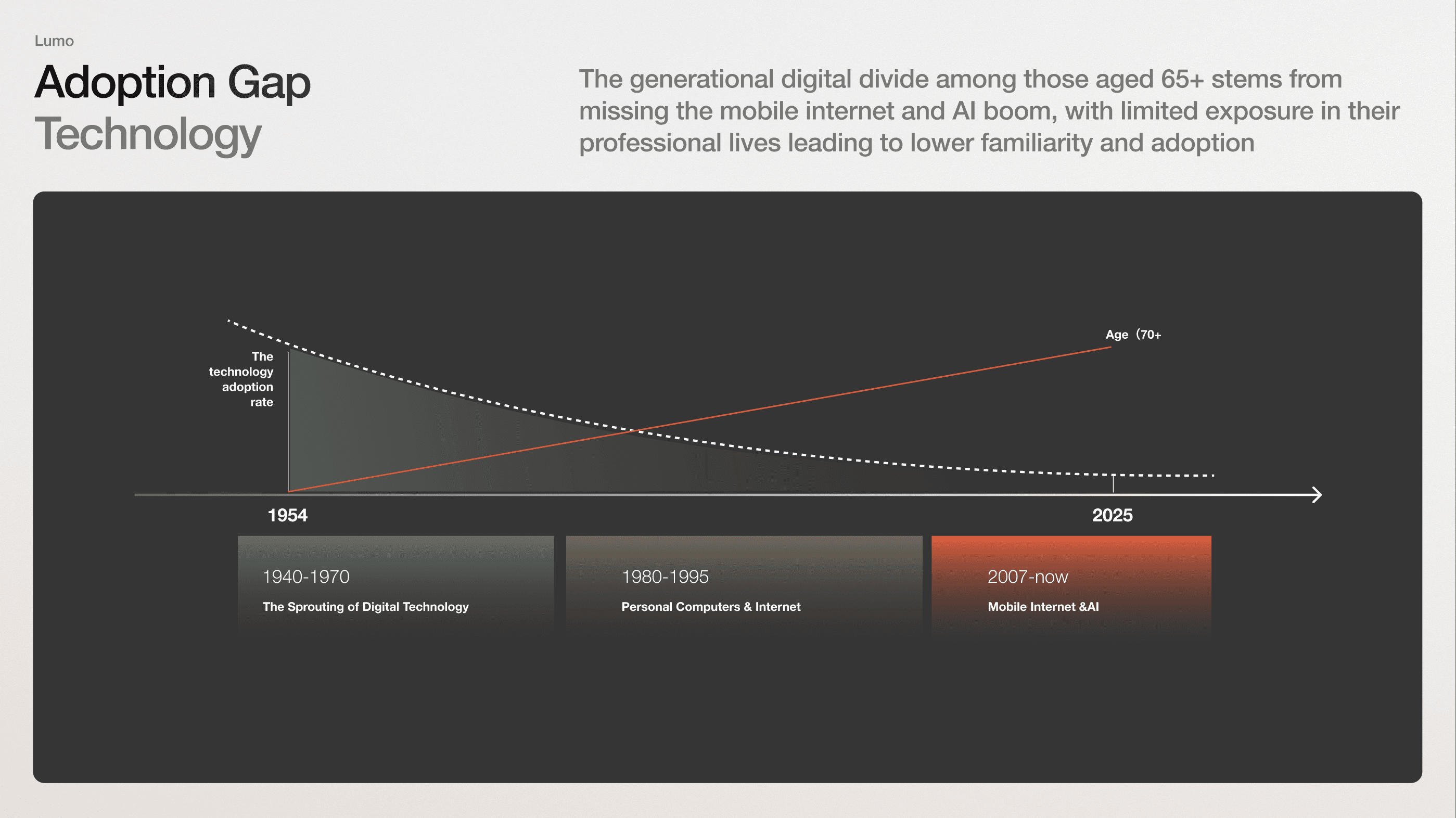
The growing generational technology gap has left many older adults struggling to engage with the digital world. Seniors who missed the rise of smartphones and AI often face physical, cognitive, and emotional barriers when using modern technology.
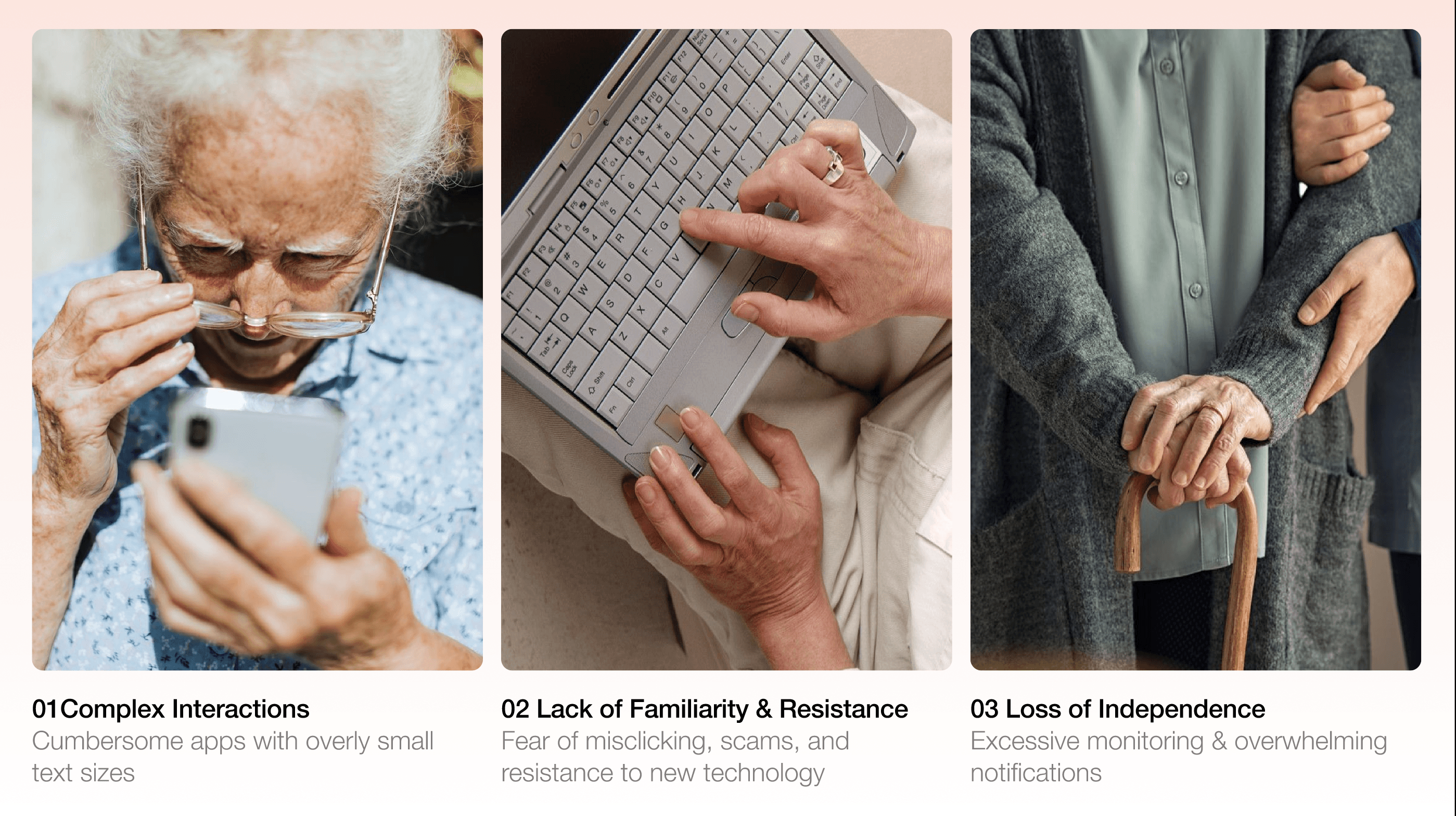
User research reveals recurring pain points: anxiety around making mistakes, fear of scams, and confusion caused by small icons, layered menus, and app-based interfaces. Voice assistants, while accessible in theory, are often misinterpreted, unintentionally activated, and lack contextual clarity. As a result, many older adults depend on others for basic digital tasks, gradually losing autonomy and confidence.
Emotionally, technology frequently alienates rather than empowers elderly users. Products designed for seniors tend to prioritize monitoring and safety, reinforcing passive use instead of enabling independent interaction.
From a market perspective, most senior-oriented products focus on medical monitoring or simplified smartphones—addressing safety but not empowerment. There remains a clear gap for tools that allow older adults to actively engage with technology without needing to learn complex systems.
1.Object-Triggered Interaction
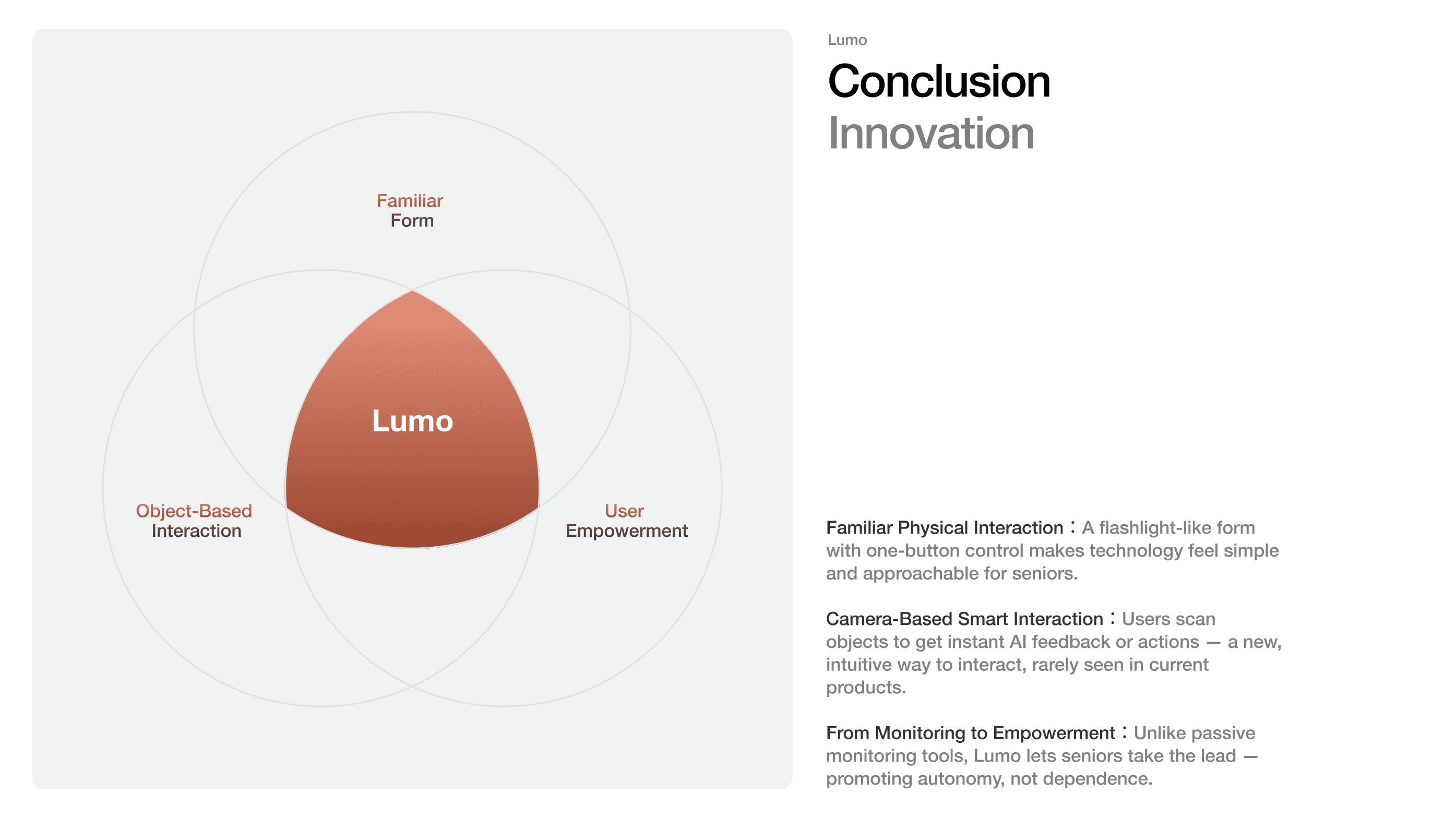
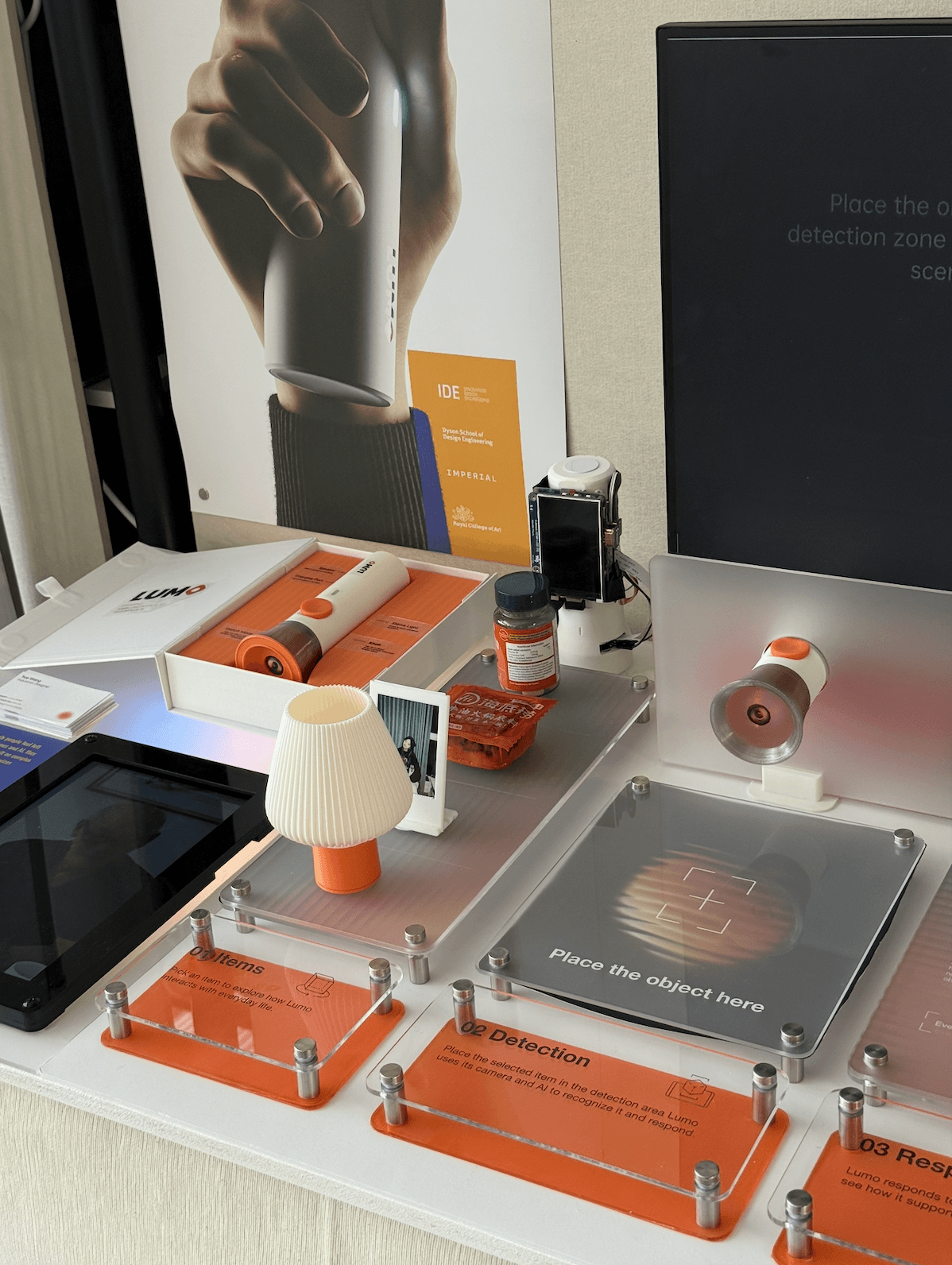
Lumo introduces an object-triggered AI interaction model. By simply pointing at physical or digital objects, the system understands user intent and provides context-aware guidance or actions—eliminating the need for screens or complex commands.
2.Familiar Form, Minimal Control
Designed in the form of a flashlight, Lumo leverages a familiar object to reduce learning barriers. A single-button interface minimizes cognitive load and enables intuitive, confident use for older adults.
3. Autonomy over Monitoring
Unlike typical senior technologies focused on surveillance or alerts, Lumo is designed as a self-controlled tool. It empowers users to actively engage with technology, preserving independence and dignity rather than creating dependency.
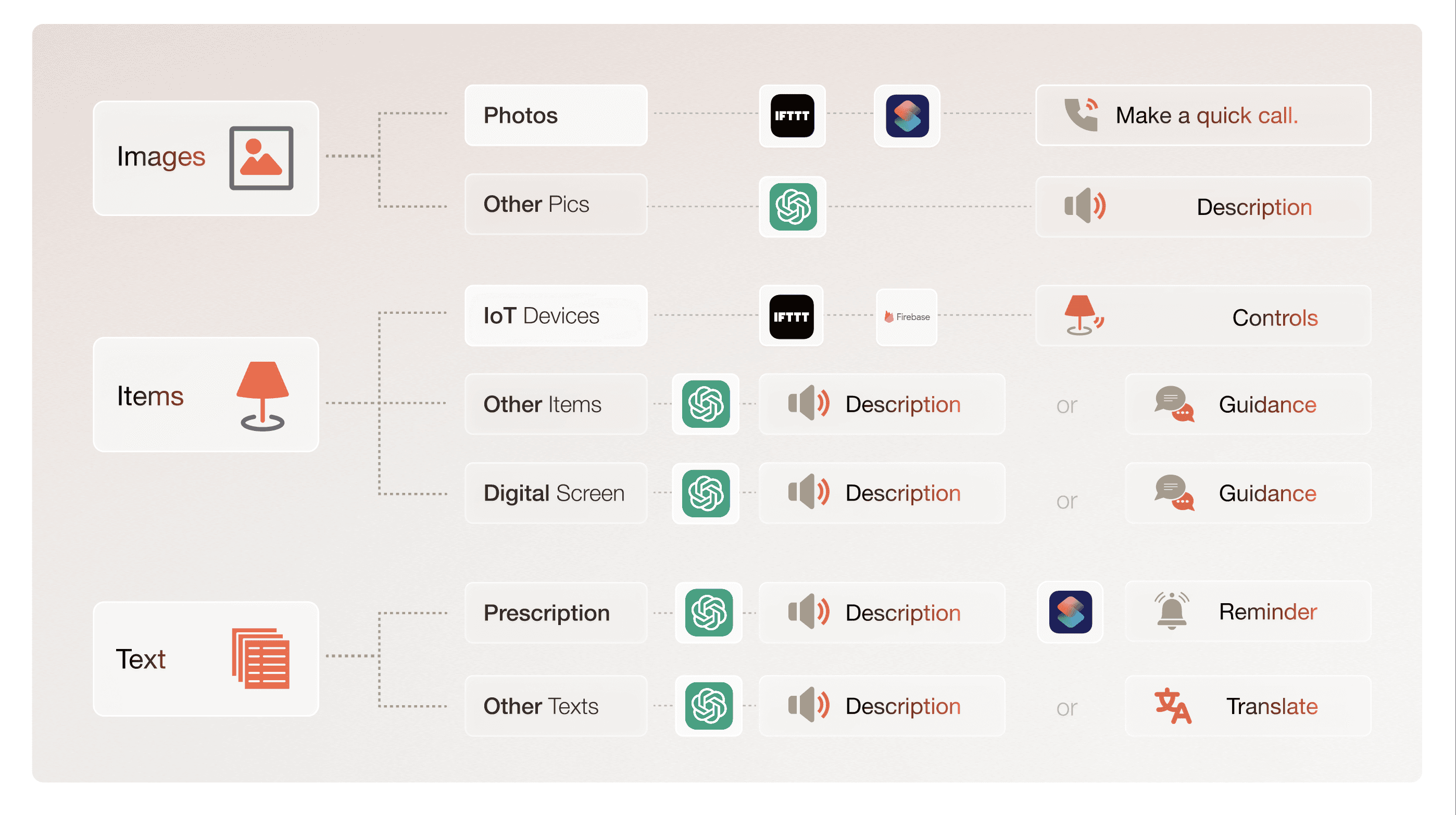
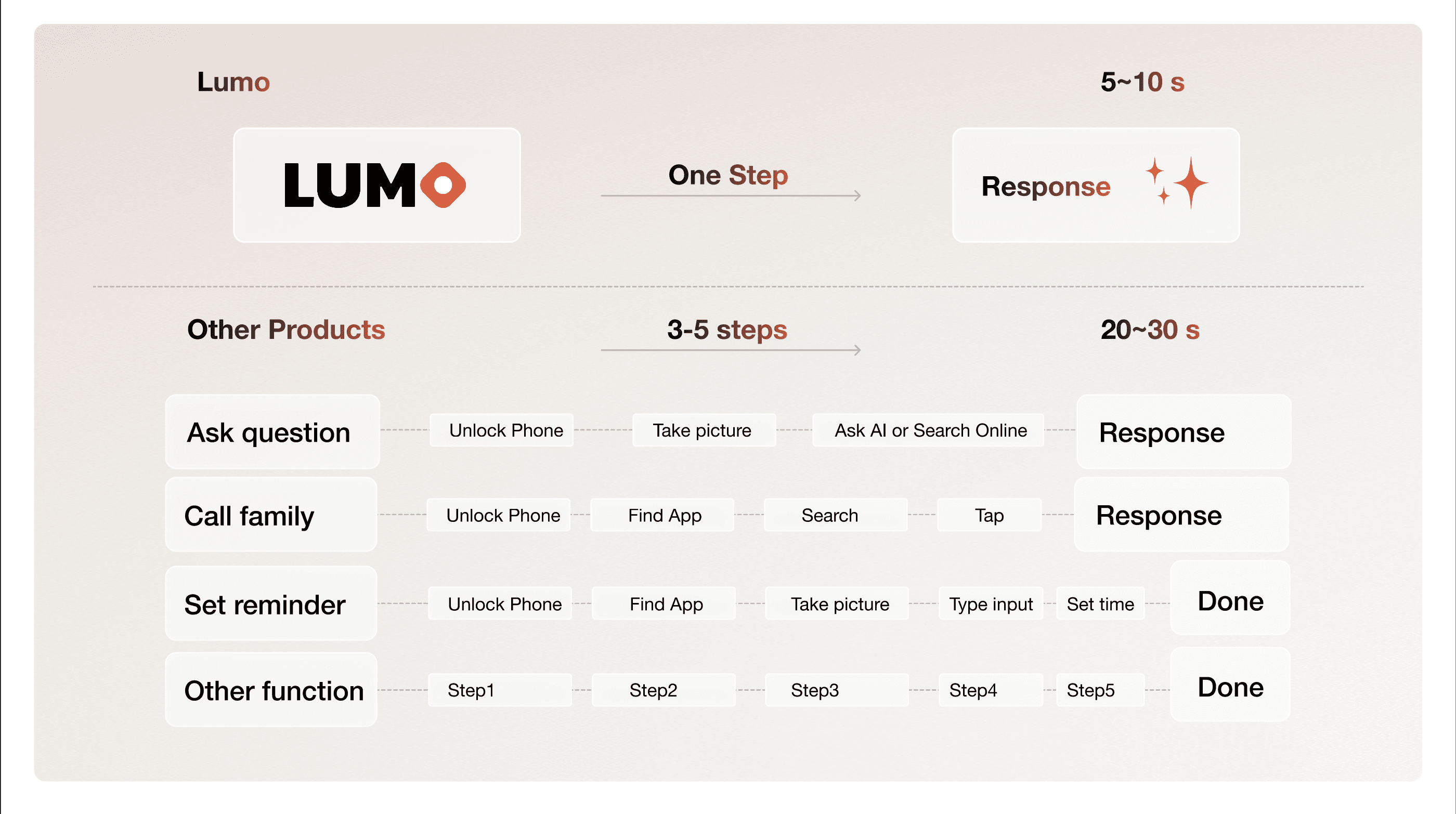
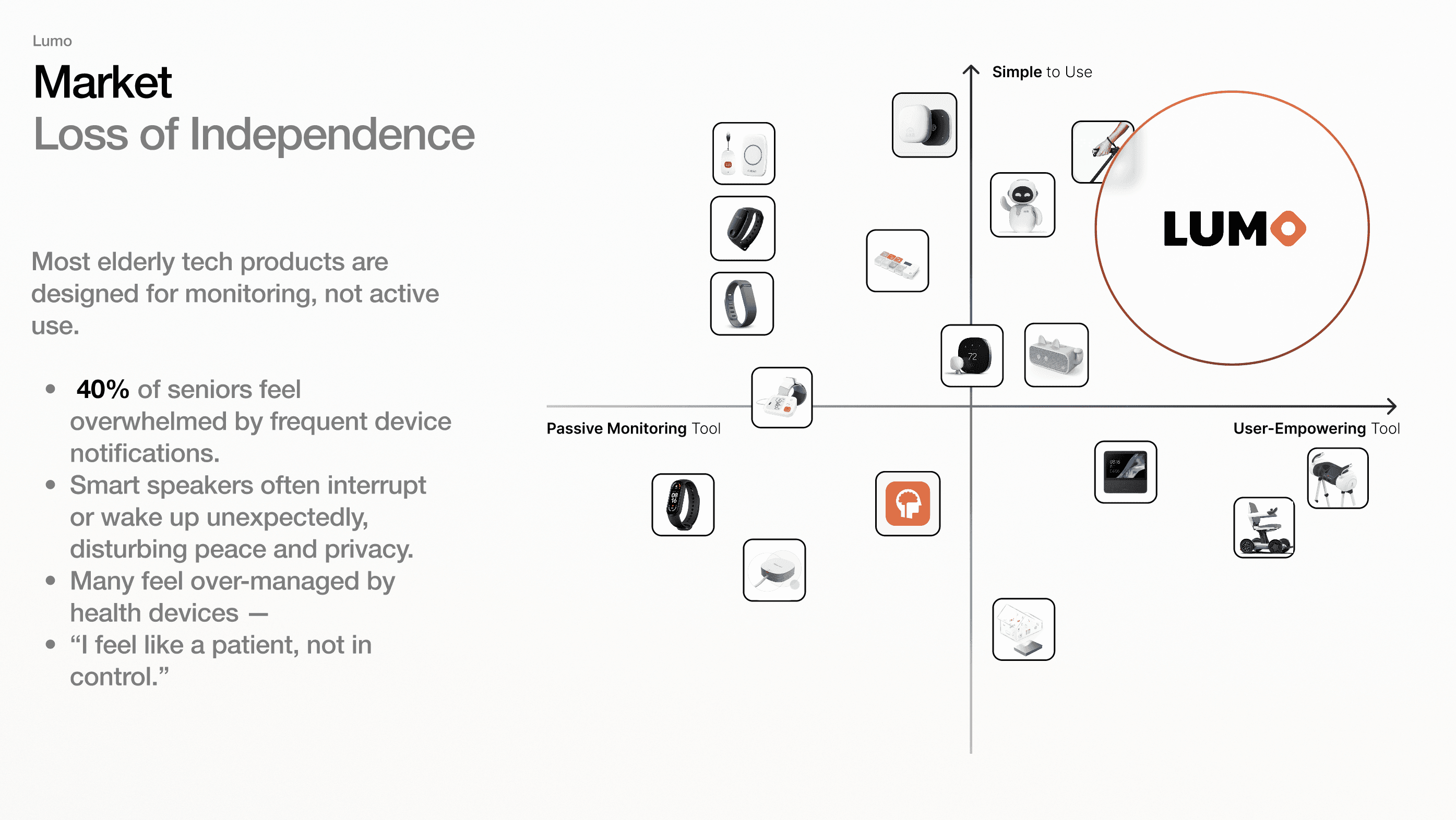
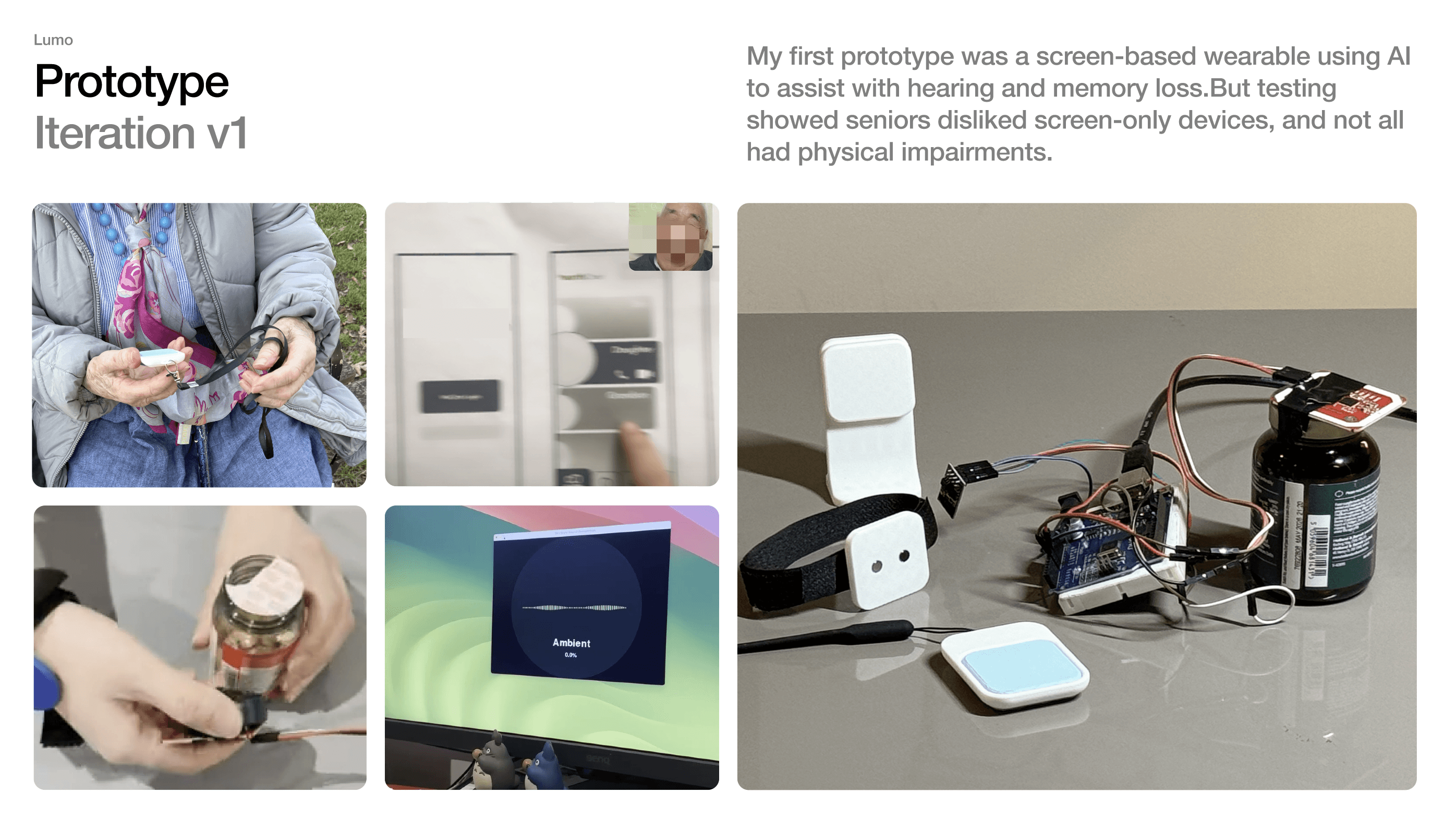
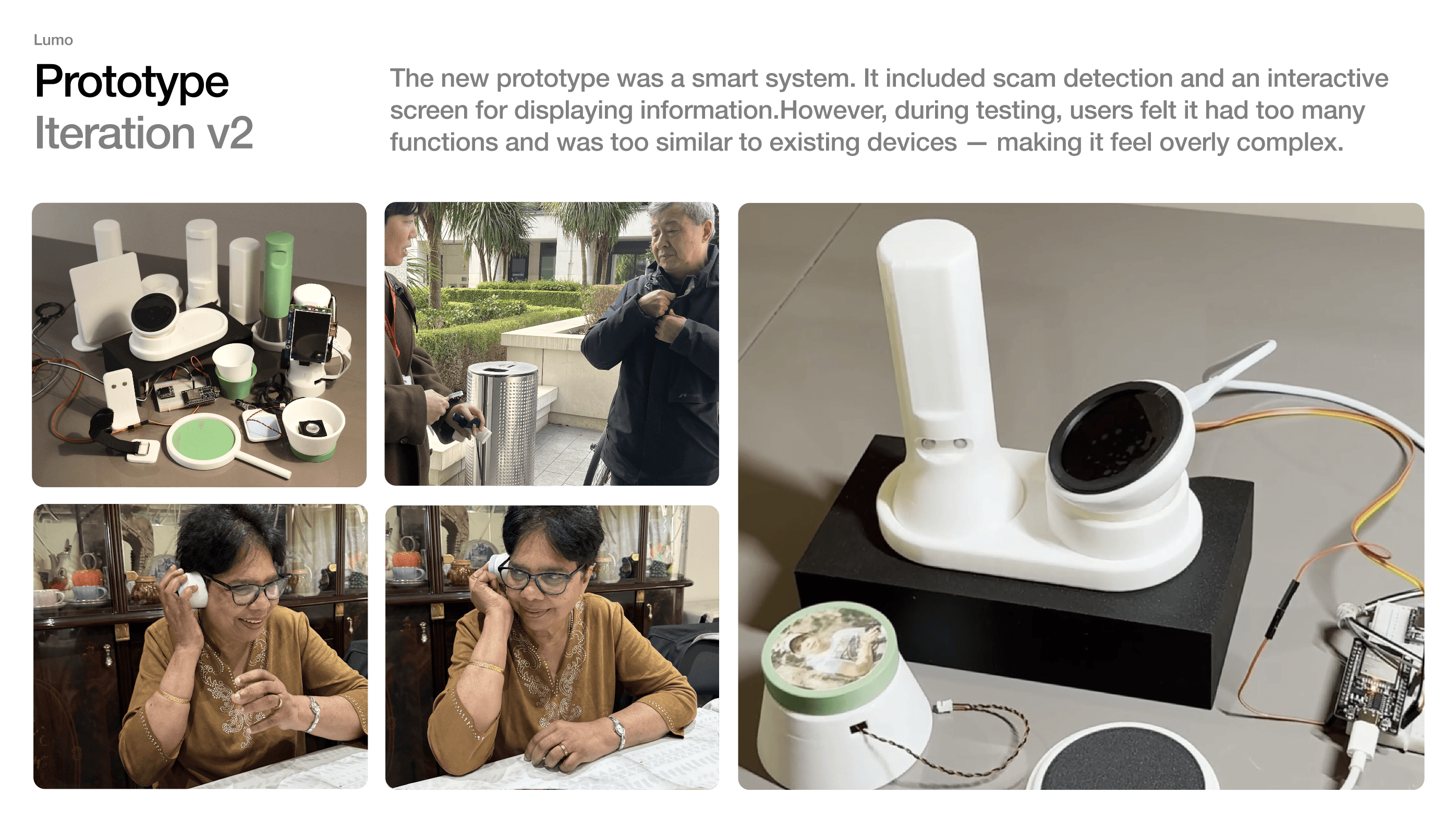
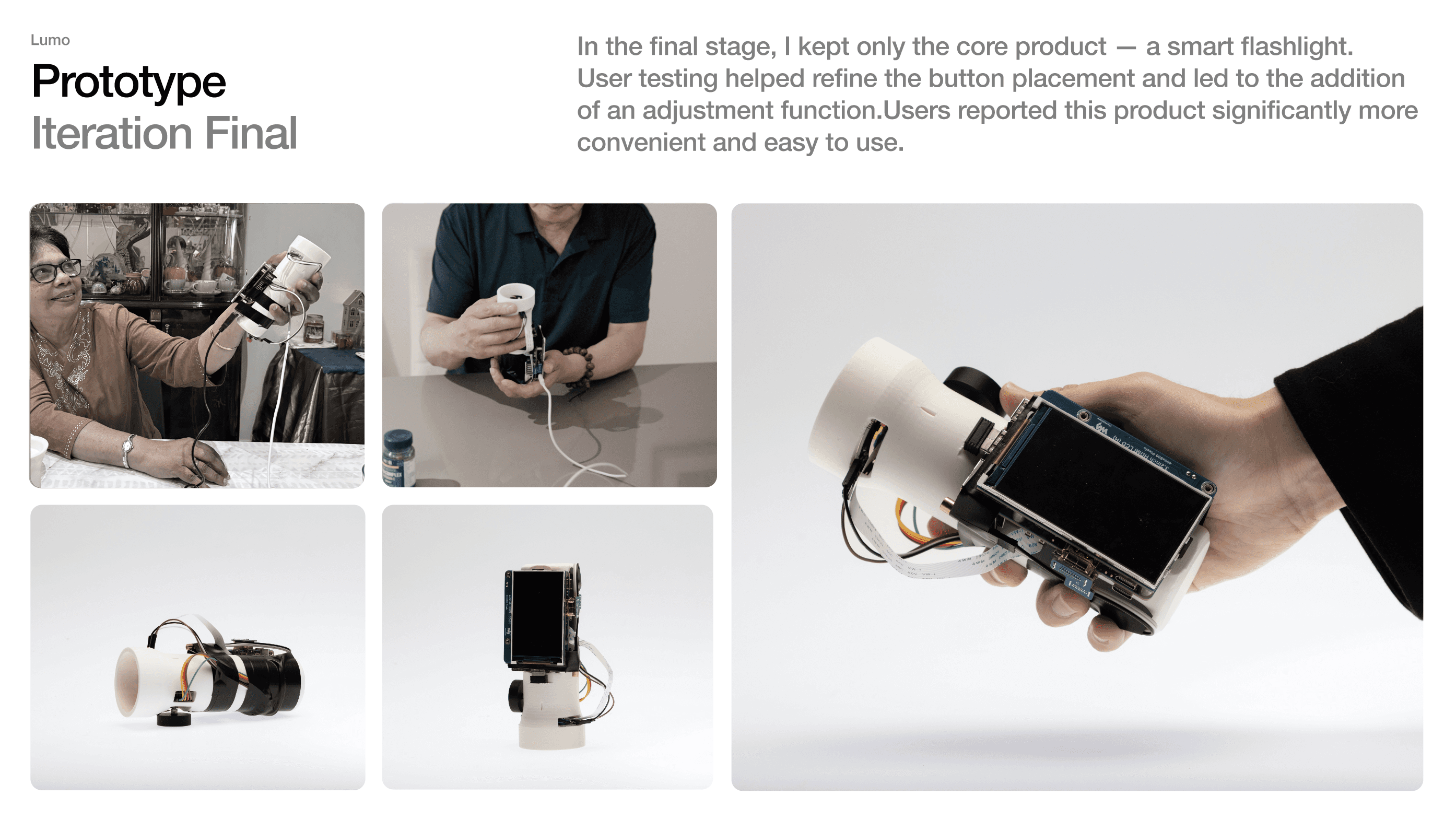
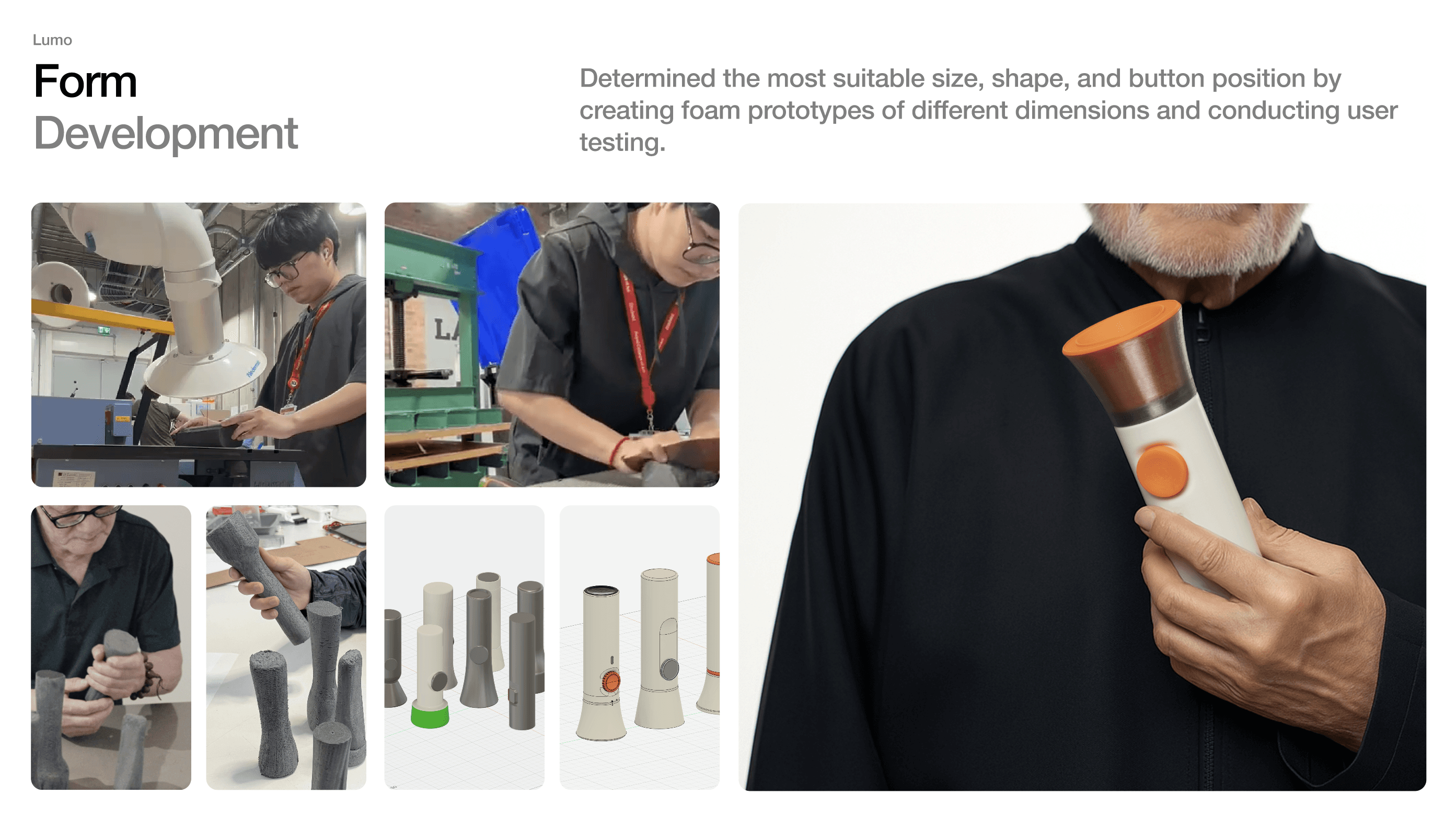
Lumo demonstrates strong potential in both technological scalability and market extensibility. At its core is a modular AI vision system that translates real-world objects into digital triggers. This interaction model can be extended beyond elderly users to scenarios such as early childhood education, cognitive assistance, and public service guidance. Its screen-free, tactile interface makes the system highly inclusive and culturally neutral.
By introducing object-triggered AI interaction through a familiar physical form, Lumo offers a distinct alternative to voice-based assistants and simplified smartphones. This positions it uniquely in the market, bridging hardware simplicity with intelligent, context-aware software behavior.
Lumo further evolves through adaptive learning. By observing interaction patterns over time, it personalizes feedback to match individual routines and preferences, transforming the device from a passive aid into an intelligent, proactive companion.
With the ability to integrate into smart home ecosystems, Lumo extends from assistive use into everyday living, enabling intuitive control of connected devices. As the global aging population grows, Lumo presents a low-barrier, emotionally intelligent platform that can scale across users, scenarios, and future service ecosystems.